
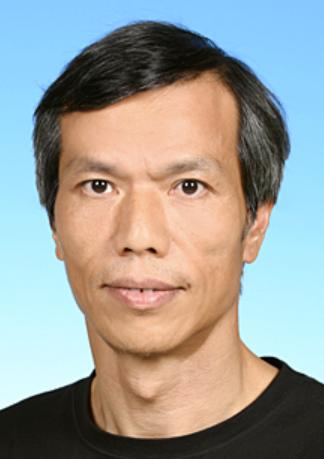
Prof. James Tin Yau KWOK
Fellow IEEE
The Hong Kong University of Science and Technology, Hong Kong, China
Biography:
James Kwok is a Professor in the Department of Computer Science and Engineering, Hong Kong University of Science and Technology. He is an IEEE Fellow.Prof Kwok received his B.Sc. degree in Electrical and Electronic Engineering from the University of Hong Kong and his Ph.D. degree in computer science from the Hong Kong University of Science and Technology. He then joined the Department of Computer Science, Hong Kong Baptist University as an Assistant Professor. He returned to the Hong Kong University of Science and Technology and is now a Professor in the Department of Computer Science and Engineering. He is serving as an Associate Editor for the IEEE Transactions on Neural Networks and Learning Systems, Neural Networks, Neurocomputing, Artificial Intelligence Journal, International Journal of Data Science and Analytics, and on the Editorial Board of Machine Learning. He is also serving / served as Senior Area Chairs of major machine learning / AI conferences including NeurIPS, ICML, ICLR, IJCAI, and as Area Chairs of conferences including AAAI and ECML. He is on the IJCAI Board of Trustees. He is recognized as the Most Influential Scholar Award Honorable Mention for "outstanding and vibrant contributions to the field of AAAI/IJCAI between 2009 and 2019".
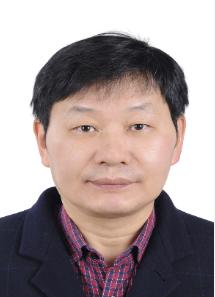
Distinguished Prof. Wanyang Dai
President & CEO: SIR Fourm (Industrial 6.0 Forum)
Nanjing University, China
Biography:
Wanyang Dai is a Distinguished Professor in Mathematics School of Nanjing University, Chief Scientist at Su Xia Control Technology, President and CEO of U.S. based (blochchain and quantum computing) SIR Forum (Industial 6.0 Forum), a Special Guest Expert in Jiangsu FinTech Research Center, Chairman of Jiangsu Big Data-Blockchain and Smart Information Special Committee, where his research includes stochastic processes related big model and quantum computing, artificial intelligence and machine learning, optimization and optimal control, admission/scheduling/routing protocols and performance analysis/optimization for various projects in BigData-Blockchain oriented quantum-cloud computing and the next generation of wireless and wireline communication systems, forward/backward stochastic (ordinary/partial) differential equations and their applications to queueing systems, stochastic differential games, communication networks, Internet of Things, financial engineering, energy and power engineering, etc. His “influential” achievements are published in “big name” journals including Journal of Applied Statistics, Probability in the Engineering and Informational Sciences, Quantum Information Processing, Operational Research, Operations Research, Computers & Mathematics with Applications, Communications in Mathematical Sciences, Journal of Computational and Applied Mathematics, Queueing Systems, Mathematical and Computer Modeling of Dynamical Systems, etc. His researches are awarded as outstanding papers by various academic societies, e.g., IEEE Top Conference Series, etc.. He has one Invention Patent approved by China National Intellectual Property Administration in 2024 and one Technology Transfer approved by (U.S.A.) Bell Labs (Now called Nokia Bell Labs) during 1998-1999. He received his Ph.D degree in applied mathematics jointly with industrial engineering and systems engineering from Georgia Institute of Technology, Atlanta, GA, U.S.A., in 1996, where he worked on stochastics and applied probability concerning network performance modeling and analysis, algorithm design and implementation via stochastic diffusion approximation. The breakthrough results and methodologies developed in his thesis were cited, used, and claimed as “contemporaneous and independent” achievements by some other subsequent breakthrough papers that were presented as “45 minute invited talk in probability and statistics” in International Congress of Mathematicians (ICM) 1998, which is the most privilege honor in the mathematical society. The designed finite element-Galerkin algorithm to compute the stationary distributions of reflecting Brownian motions (weak solutions of general dimensional partial differential equations) is also well-known to the related fields.

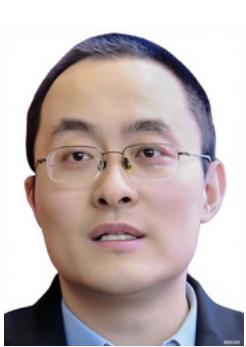
Prof. Yudong Zhang
Southeast University, China
Biography:
Yudong Zhang received his Ph.D. degree in Information Science and Engineering from Southeast University, Nanjing, China, in 2010. He earned his Bachelor's and Master's degrees from Nanjing University of Aeronautics and Astronautics. He was a Postdoctoral Researcher at Columbia University, USA (2010–2012), and later served as an Assistant Research Scientist at the Research Foundation for Mental Hygiene (RFMH), USA (2012–2013). He held a Full Professor position at Nanjing Normal University (2013–2017) and then served as a Chair Professor at the University of Leicester, UK (2017–2025).
He is currently a Chief Professor and Doctoral Supervisor at Southeast University, China, and a recipient of the Changjiang Scholar Award and National High-Level Talent Program Award. His research interests include artificial intelligence, computer vision, medical image analysis, large models, brain-computer interfaces, and robotics. He is a Fellow of IET, EAI, and BCS, a Senior Member of IEEE and ACM, and an ACM Distinguished Speaker. He has been recognized as a Highly Cited Chinese Researcher by Elsevier and a Highly Cited Researcher by Clarivate Analytics, and is listed among Stanford's World's Top 2% Scientists. He has published over 400 academic papers, including more than 50 ESI Highly Cited Papers, with an H-index of 83 on Google Scholar. He has served as (co-)principal investigator on multiple domestic and international research projects, including those funded by the US National Institutes of Health (NIH) and the UK Engineering and Physical Sciences Research Council (EPSRC). His research has been widely reported by Reuters, BBC, and more than 50 other news media outlets.